
Crypto Mining Overview 2026
Crypto mining profitability in 2026 presents a complex landscape that differs significantly from the early days of cryptocurrency. While the fundamental concept remains the same—using computational power to validate transactions and earn rewards—the economics have evolved dramatically due to increased competition, regulatory changes, and technological advances.
The mining industry has matured from individual enthusiasts with consumer-grade hardware to industrial-scale operations with specialized equipment and strategic energy sourcing. This evolution has created both challenges and opportunities for potential miners.
Bitcoin mining difficulty has increased by over 300% since 2020, while Ethereum's transition to Proof of Stake has eliminated traditional mining entirely. However, numerous alternative cryptocurrencies still offer profitable mining opportunities for those willing to research and adapt to changing conditions.
Key Profitability Factors
Successful mining in 2026 requires careful analysis of multiple interconnected factors:
Electricity Costs
Energy costs remain the single largest expense for miners, often accounting for 60-80% of total operating costs. Profitability varies dramatically based on local electricity rates:
- Low-Cost Regions: $0.03-0.08 per kWh (Iceland, parts of Canada, Middle East)
- Moderate Regions: $0.08-0.15 per kWh (Many US states, parts of Europe)
- High-Cost Regions: $0.15-0.30+ per kWh (California, Germany, Japan)
Miners increasingly relocate to regions with renewable energy sources or excess capacity, such as hydroelectric facilities during low-demand periods.
Hardware Efficiency
Modern mining equipment is measured in joules per terahash (J/TH) for efficiency:
- Latest Bitcoin ASICs: 15-25 J/TH efficiency
- Previous Generation: 30-50 J/TH (often unprofitable at current difficulty)
- GPU Mining: Viable for specific altcoins with lower difficulty
Hardware depreciation and maintenance costs must be factored into long-term profitability calculations.
Network Difficulty
Mining difficulty automatically adjusts based on total network hash rate:
- Bitcoin: Adjusts every 2,016 blocks (~2 weeks)
- Ethereum: No longer applicable (PoS transition)
- Altcoins: Various adjustment periods and algorithms
Difficulty increases reduce individual miner rewards, requiring more efficient hardware or cheaper energy to maintain profitability.

Cryptocurrency Prices
Asset price volatility directly impacts mining rewards:
- Bull Markets: Higher prices can offset increased difficulty
- Bear Markets: Reduced prices may make older hardware unprofitable
- Halving Events: Bitcoin's periodic reward reductions significantly impact profitability
Diversification across multiple cryptocurrencies can reduce price volatility risk.
Regulatory Environment
Legal considerations affect operational costs and feasibility:
- Licensing Requirements: Some jurisdictions require mining permits
- Energy Regulations: Restrictions on energy consumption or carbon emissions
- Tax Implications: Mining income classification and reporting requirements
- Infrastructure Limits: Grid capacity and connection costs
Mining Hardware Options
2026 offers diverse hardware options for different mining approaches:
Bitcoin ASIC Miners
Specialized Bitcoin mining hardware dominates the SHA-256 algorithm:
- Bitmain Antminer S19 XP: 210 TH/s, 21.5 J/TH, ~$12,000
- WhatsMiner M50S++: 112 TH/s, 20 J/TH, ~$7,000
- MicroBT AvalonMiner 1246: 90 TH/s, 28 J/TH, ~$5,500
These industrial-grade machines require significant upfront investment but offer the best efficiency for Bitcoin mining. Used equipment markets provide more affordable entry points but with reduced lifespan and efficiency.
GPU Mining Rigs
Graphics cards remain viable for specific algorithms and altcoins:
- NVIDIA RTX 4090: High efficiency for Ethash and other GPU-friendly algorithms
- AMD RX 7900 XTX: Competitive performance with good power efficiency
- Custom Mining Rigs: 6-8 GPU configurations optimized for specific coins
GPU mining offers flexibility to switch between different cryptocurrencies based on profitability, but requires more technical expertise and ongoing optimization.

Alternative Mining Hardware
Specialized equipment for different algorithms:
- Scrypt ASICs: For Litecoin and other Scrypt-based coins
- X11 ASICs: For Dash and other X11 algorithm coins
- Equihash ASICs: For Zcash and similar privacy coins
- FPGA Miners: Programmable hardware for multiple algorithms
Used vs. New Equipment
Equipment age significantly impacts profitability:
- New Equipment: Highest efficiency but significant upfront cost
- 1-2 Year Old: Good balance of cost and efficiency
- 3+ Year Old: Often unprofitable at current difficulty levels
Calculate payback periods carefully and consider total cost of ownership including maintenance and eventual replacement costs.
Cost Analysis and Calculations
Accurate profitability requires comprehensive cost analysis:
Initial Investment Costs
Startup expenses include:
- Hardware Purchase: $2,000-$20,000+ depending on scale
- Power Supply Units: 80+ Gold certified PSUs for efficiency
- Cooling Equipment: Fans, air conditioning, or immersion cooling
- Infrastructure: Racking, cabling, electrical work
- Software Licenses: Mining pool fees, monitoring tools
Operating Expenses
Ongoing monthly costs:
- Electricity: Primary expense, varies by location and usage
- Maintenance: Hardware repairs, component replacement
- Internet: Reliable high-speed connection
- Insurance: Equipment and liability coverage
- Facility Costs: Rent, security, utilities for commercial operations

Revenue Streams
Mining income sources include:
- Block Rewards: New coin issuance for validating blocks
- Transaction Fees: Fees from processed transactions
- Staking Rewards: For proof-of-stake participation
- Mining Pool Dividends: Shared rewards from pool participation
Profitability Calculations
Key metrics for analysis:
- Break-even Price: Minimum coin price for profitability
- Payback Period: Time to recover initial investment
- Monthly Profit: Net revenue after all expenses
- ROI Percentage: Return on investment over time
Use professional mining calculators and update assumptions regularly based on changing market conditions.
Alternative Mining Methods
Beyond traditional hardware mining, several alternatives offer different risk/reward profiles:
Cloud Mining
Contracting mining power from remote facilities:
- Advantages: No hardware maintenance, no noise/heat, immediate deployment
- Disadvantages: Higher long-term costs, counterparty risk, limited control
- Popular Providers: Genesis Mining, Hashflare, NiceHash
Research providers thoroughly and understand contract terms, as many cloud mining services have proven unreliable or fraudulent.
Staking and Proof of Stake
Earning rewards by validating transactions with owned coins:
- Requirements: Minimum coin holdings, sometimes technical setup
- Rewards: 5-20% annual returns depending on network and coin
- Risks: Coin price volatility, slashing penalties for misbehavior
- Popular Coins: Ethereum 2.0, Cardano, Polkadot, Solana
Staking offers more predictable returns with lower technical requirements than traditional mining.

Mining Pools
Joining collective mining operations:
- Reduced Variance: More consistent (though smaller) rewards
- Lower Barriers: Access to industrial-scale operations
- Fees: Typically 1-3% of rewards for pool operator
- Popular Pools: F2Pool, Poolin, Slush Pool, Ethermine
Masternodes
Running full network nodes with collateral requirements:
- Collateral: 1,000-100,000+ coins required for setup
- Rewards: Regular payments for network services
- Technical Requirements: Dedicated server/VPS, static IP
- Risk Considerations: Coin price volatility affects collateral value
Mobile and Browser Mining
Lightweight mining options (generally low profitability):
- Mobile Apps: CoinHive, MinerGate mobile applications
- Browser Mining: JavaScript-based mining on websites
- Limitations: Minimal returns, battery drain, device wear
Environmental Considerations
2026 mining operations face increasing environmental scrutiny:
Energy Consumption
Large-scale operations consume significant electricity:
- Bitcoin Network: ~150 TWh annually (comparable to Argentina)
- Per Transaction: ~500-1,000 kWh per Bitcoin transaction
- Renewable Adoption: Increasing use of solar, hydro, and wind energy
Many operations now prioritize renewable energy sources to reduce environmental impact and operating costs.
Carbon Footprint
Environmental concerns include:
- Carbon Offsetting: Purchasing carbon credits to neutralize emissions
- Green Energy Certificates: Documentation of renewable energy usage
- Regulatory Pressure: Increasing environmental compliance requirements
- Public Perception: Environmental impact affecting project adoption

Sustainable Practices
Industry responses to environmental concerns:
- Immersion Cooling: More efficient heat management reducing energy waste
- Flared Gas Utilization: Converting waste gas from oil operations to electricity
- Seasonal Relocation: Moving operations to follow renewable energy availability
- Heat Recovery: Using mining waste heat for district heating systems
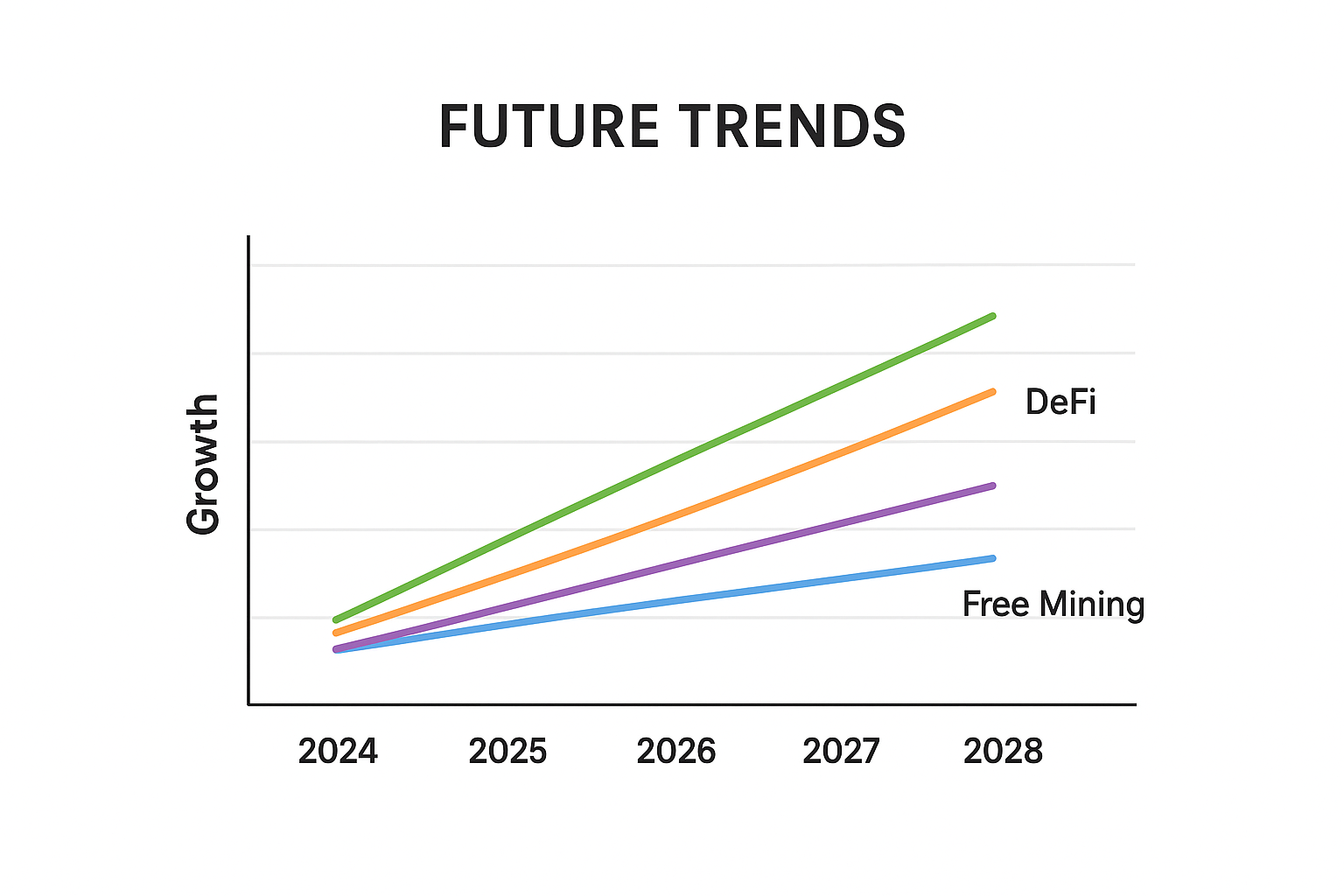
2026-2027 Market Outlook
The mining landscape continues evolving with several key trends:
Technological Advancement
Hardware improvements include:
- More Efficient ASICs: 10-15 J/TH efficiency targets for next generation
- Quantum-Resistant Algorithms: Preparing for post-quantum cryptography
- AI Optimization: Machine learning for mining efficiency optimization
- Modular Designs: Easier maintenance and upgrade paths
Regulatory Evolution
Changing legal landscape:
- Stricter Environmental Standards: Carbon pricing and emissions limits
- Energy Source Requirements: Mandates for renewable energy usage
- Licensing Frameworks: Standardized permitting processes
- Tax Harmonization: Consistent international tax treatment
Market Consolidation
Industry trends toward larger operations:
- Institutional Participation: Corporate mining operations with significant capital
- Public Mining Companies: Listed entities bringing transparency and capital
- Specialized Mining Funds: Investment vehicles focused on mining operations
- Geographic Concentration: Operations clustering in low-cost energy regions
Alternative Consensus Mechanisms
Technology evolution impacts traditional mining:
- Proof of Stake Adoption: Ethereum's successful transition reducing mining demand
- Hybrid Models: Combining proof of work with other consensus mechanisms
- Layer 2 Solutions: Reducing base layer mining requirements
- Proof of History: Alternative approaches to transaction validation
Getting Started Guide
For those considering mining entry in 2026:
Research Phase
Essential preliminary steps:
- Market Analysis: Current profitability of target cryptocurrencies
- Local Regulations: Legal requirements and restrictions in your area
- Energy Costs: Detailed analysis of local electricity rates
- Hardware Research: Efficiency comparisons and availability
Financial Planning
Comprehensive budget development:
- Capital Requirements: Total upfront investment needed
- Cash Flow Projections: Monthly operating costs and expected revenues
- Risk Assessment: Market volatility and regulatory risk analysis
- Exit Strategy: Plans for equipment disposal or repurposing
Setup Process
Implementation steps:
- Equipment Purchase: Selecting appropriate hardware for target coins
- Facility Preparation: Electrical setup, cooling, security measures
- Software Configuration: Mining software, pool selection, monitoring tools
- Testing Phase: Small-scale testing before full deployment

Ongoing Management
Operational best practices:
- Performance Monitoring: Regular efficiency and profitability tracking
- Maintenance Scheduling: Preventive maintenance to minimize downtime
- Market Adaptation: Switching between coins based on profitability
- Security Updates: Keeping software and systems current
Frequently Asked Questions
How much money do I need to start mining?
Entry-level GPU mining can start around $2,000-5,000, while serious ASIC mining requires $10,000-50,000+ initial investment. Consider starting small and scaling based on profitability.
Is home mining still profitable?
Generally not for Bitcoin or major cryptocurrencies due to high difficulty and energy costs. Small-scale operations might work for specific altcoins or in regions with extremely low electricity costs.
What's the best cryptocurrency to mine in 2026?
Profitability changes constantly. Currently favorable options include Ravencoin, Ergo, and Flux, but always check current difficulty, price, and reward structures before committing resources.
How long does mining equipment last?
ASIC miners typically remain profitable for 2-4 years before efficiency degrades significantly. GPU mining hardware can last longer but becomes less competitive as difficulty increases.
Do I need special permits to mine?
Requirements vary by location. Some areas require business licenses, while others have specific mining permits or energy consumption restrictions. Always check local regulations before starting operations.
Can I mine with my gaming computer?
Technically possible but rarely profitable. Gaming hardware consumes more power relative to mining output compared to dedicated equipment. The electricity costs usually exceed potential earnings.
What happens when cryptocurrencies stop mining rewards?
Miners will rely solely on transaction fees for income. This may reduce total mining rewards but could be offset by higher cryptocurrency prices and increased transaction volume.
Conclusion
Crypto mining in 2026 requires sophisticated analysis, significant capital investment, and careful risk management. While profitability remains possible, it demands professional-level planning and execution rather than casual participation.
The industry has evolved from a hobbyist activity to a serious business requiring expertise in hardware, energy management, financial analysis, and regulatory compliance. Success depends on thorough research, strategic location selection, and continuous adaptation to changing market conditions.
For most individuals, alternative approaches like staking, yield farming, or investing in mining companies may offer better risk-adjusted returns than direct mining operations. However, for those with appropriate resources and expertise, carefully planned mining operations can still generate substantial profits.
The key is realistic expectations, comprehensive planning, and recognition that mining has become an industrial-scale enterprise rather than an accessible side activity. Those willing to approach it professionally can still find opportunities in the evolving cryptocurrency mining landscape.
For ongoing mining insights and profitability updates, explore our mining guides, understand Bitcoin's mining evolution, and latest crypto news. The mining industry continues to innovate and adapt, creating new opportunities for informed participants. Readers interested in alternative income strategies should also explore DeFi yield opportunities and stablecoin staking options that require less technical infrastructure.


Leave a Comment